Home> Industry News> How to use an oven to cook pizza outdoors: homemade pizza tips!

How to use an oven to cook pizza outdoors: homemade pizza tips!

2024,06,21
Got a gas-fired outdoor tabletop Pizza Oven this past summer (an Ooni Koda), and when I first fired it up I had a little trouble working with it, which left me feeling a little perplexed. I’ve been making pizza for nearly 40 years, and consider myself something of a pizza expert, at least when it comes to making it at home. Pizza was the first thing I taught myself to cook, and I've been tweaking my own recipes ever since. I've also developed pizza and flatbread recipes for publication for more than 10 years now, starting with the New York-style pie I created for Cook’s Illustrated magazine.

Are you still finding it difficult for you to make your perfect pizza? Don't be afraid of that. In this article, we'll help you by providing step-by-step cooking instructions, sauce and topping advice, pizza dough and baking tips, as well as a recommended pizza recipe. Overall, the keys to a perfect homemade pizza are high heat, proper preparation of ingredients, and vigilant cooking. Happy baking!

77d474d957984cc279c3e213a7


Step 1: Preparing Your Pizza Dough

 For thin-crust pizza:
  • All-purpose flour is commonly used and yields a crispy crust.
  • Bread flour can also work well.
For thick-crust pizza:
  • A blend of all-purpose and bread flour helps achieve a soft and chewy crust.
  • Semolina can be added for extra texture and chewiness.
For Neapolitan-style pizza:
  • 00 pizza flour, such as Caputo, gives a soft, airy crust.
For New York-style pizza:
  • High-gluten bread flour or sir lancelot flour helps achieve a crispy, bread-like crust.
  • All-purpose can also work.
Some key considerations in choosing pizza flour:
  • Protein/gluten content affects stretchiness and chewiness
  • Finely milled 00 pizza flour can yield a softer crust
  • Whole-grain flour will create a denser, chewier crust

Creating the Dough Mixture

To create your dough, begin by combining 1-1/2 cups of warm water (around 110°F) with 2-1/4 teaspoons of active dry yeast or instant yeast and a teaspoon of sugar to activate the yeast. Allow this mixture to sit for about 10 minutes; you should see it become frothy, indicating that the yeast is active. Then mix in 3-1/2 cups of bread flour, 2 tablespoons of olive oil, and 2 teaspoons of salt. It’s important to add salt and oil after the yeast has fully activated since they can hinder yeast development.

Kneading the Dough

For kneading, transfer the dough onto a lightly floured surface and fold it onto itself. Knead it by pushing the dough downwards and forwards with the heels of your hands. Continue this process for about 5-7 minutes until the dough is smooth, elastic, and slightly tacky but not sticky. Add flour in small increments if the dough is excessively sticky.

Letting the Dough Rise

Once kneaded, place the dough in a lightly oiled bowl and turn it to coat all sides with oil. Cover the bowl with a damp cloth or plastic wrap, and let the dough rise in a warm area until it doubles in size, typically taking about 1 to 2 hours. The rise time can vary depending on the temperature and environment, so keep an eye on the dough and allow it to rise until it reaches the correct size rather than adhering strictly to the time.

Step 2: Assembling the Pizza

This stage is where you'll shape the pizza, add flavor with sauce, and personalize it with your choice of toppings.

Rolling Out Your Pizza Crust

To roll out your pizza crust, begin by dusting your working surface with a bit of flour to prevent sticking. Place the rested dough ball on the surface and start pressing it down from the center outwards, leaving a slight rim around the edge to form the crust. If the dough resists or shrinks back, let it rest for a few minutes before continuing. You can use a rolling pin for a uniform thickness or hand-stretch it if you prefer a more traditional method. Aim for a thickness of about ¼ inch for an even cook.

Applying the Sauce

For a well-proportioned pizza, spread approximately 2-3 tablespoons of pizza sauce evenly over the surface of the crust, leaving the raised rim bare to create a crust. Use the back of a spoon or a ladle to distribute the sauce, starting from the center and moving outward in a spiral motion. Be careful not to overload the dough, as too much sauce can result in a soggy pizza.

Adding Cheese and Toppings

Sprinkle a generous amount of mozzarella cheese over the sauce, ensuring an even distribution. Proceed with your chosen toppings, such as pepperoni, bell pepper, and fresh basil, for a flavorful pizza. If you're making a vegetarian pizza, you can add an assortment of vegetables like mushrooms, onions, and olives. For pepperoni pizza enthusiasts, layer on the pepperoni slices, leaving some space in between each to prevent overlapping. Drizzle a light coating of olive oil over the toppings to enhance their flavor and aid in cooking. Remember, adding too many toppings can weigh down the crust, so use them sparingly.

Step 3: Baking the Pizza

Preheating Your Oven

For a homemade pizza that has a crispy crust, preheating your oven is a non-negotiable step. Your oven should be at full temperature before the pizza goes in. Crank up the heat to the highest setting, which is typically between 450-500°F (230-260°C). Allow your oven to heat for at least 30 minutes, especially if using a pizza stone or baking stone, as they take longer to reach the right temperature.

Using a Pizza Stone or Baking Sheet

A pizza stone is ideal for simulating the environment of a pizza oven and giving you a crispy crust. Place the pizza stone in the oven during the preheating stage. If you don't have a pizza stone, use a heavy-duty baking sheet or a pizza pan. For sheet pan pizza or rectangular pizza, a high-quality rectangular baking sheet is best. You might also sprinkle cornmeal on the stone or parchment paper on the baking sheet to prevent sticking and add texture.

To transfer the pizza:

  • Pizza peel: If you're using a stone or steel, sprinkle it with cornmeal, then use a pizza peel to slide your pizza onto the stone.
  • Parchment paper: For baking sheets, place your shaped dough on parchment paper for easy handling and transfer.

Timing and Temperature

Once your oven is preheated and the pizza is prepared, it's time to bake. Slide the pizza onto the preheated stone or baking sheet. The high heat will help the dough to cook quickly and evenly, giving you that desirable crispy crust.

Here is what you need to consider:

  • Cooking time: Typically, pizzas bake within 8-15 minutes depending on the oven temperature, thickness of the dough, and the number and moisture content of the toppings.
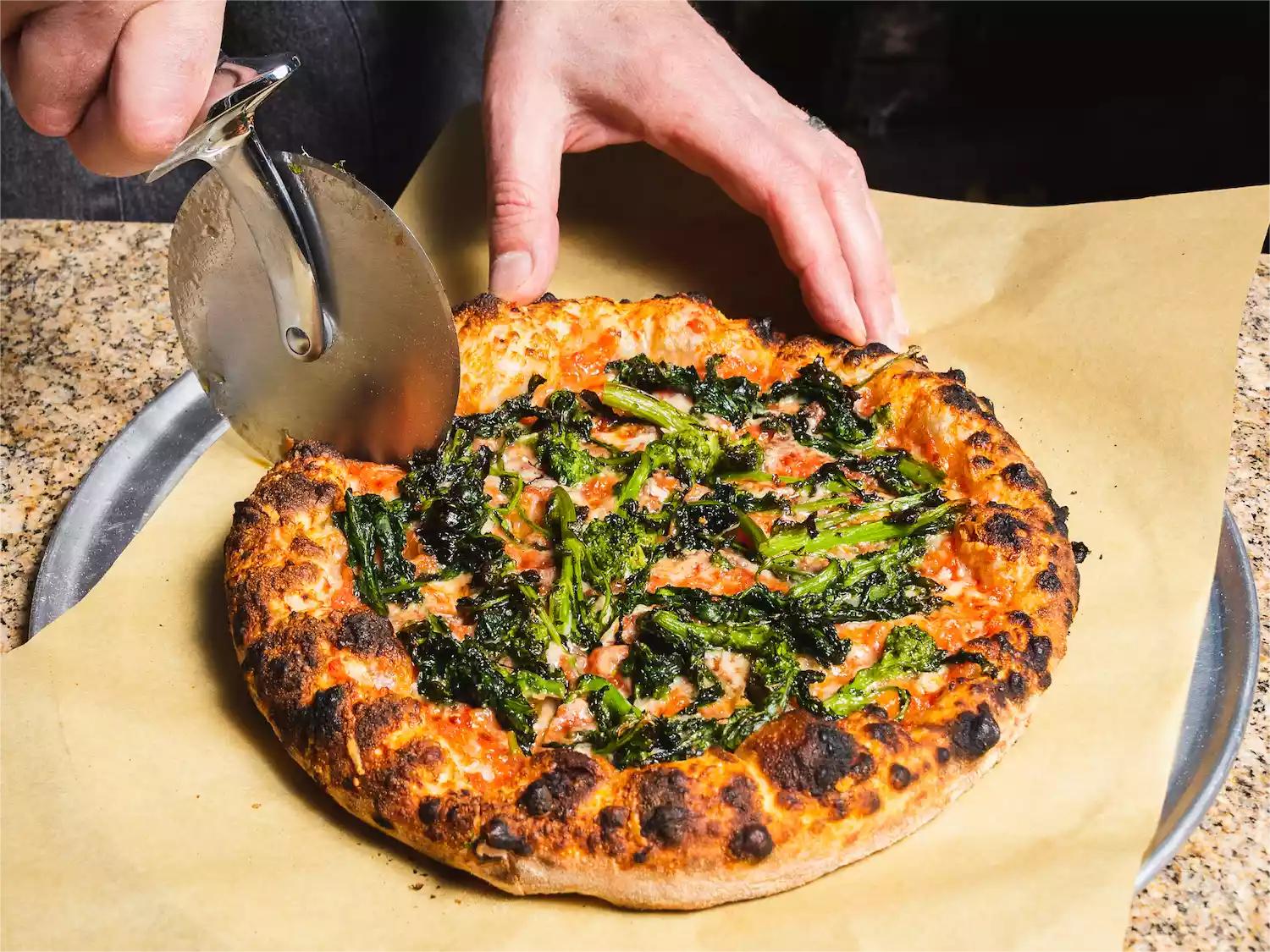
  • Doneness: The pizza is done when the crust is golden-brown and the cheese has melted and bubbled with slight browning.

Monitor your pizza throughout the cooking process, as oven temperatures and cooking times may vary. Use these guidelines to make a homemade pizza with a perfectly crispy crust and deliciously cooked toppings.

Useful Tips for Homemade Pizza

Sauce and Topping Advice

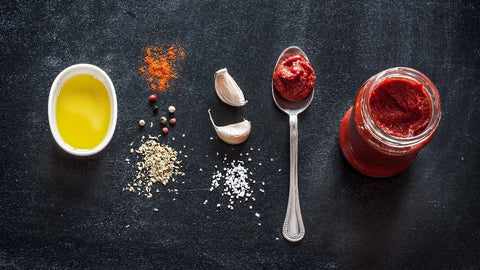
Remember to keep the sauce simple. A no-cook red sauce made with high-quality canned tomatoes, a hint of garlic, salt, and a drizzle of olive oil can be exceptionally flavorful without overpowering your toppings. 
For the toppings, balance is key. Opt for a moderate quantity of high-quality cheese and select a few toppings to avoid a soggy crust; this will ensure a well-cooked, delicious pizza.

1

Pizza Dough and Baking Tips

Crafting your dough is a foundational step in pizza making. Begin by mixing your dough in the morning or the night before for flavor development. Use bread flour for its higher protein content, which yields a chewier crust. When ready to bake, preheat your cooking surface — a pizza stone, cast iron skillet, or even a heavy-duty baking sheet — in a very hot oven (ideally above 475°F or 245°C). A hot surface is crucial as it mimics the conditions of a professional pizza oven, resulting in a crisp bottom crust.


Cookware Selecting

Selecting the right cookware is vital. A pizza stone or a heavy-duty baking sheet will help in achieving a crispy bottom. Preheat your oven to the highest temperature, typically between 450-500°F (232-260°C).

Do I need a pizza peel?

It's not essential, but a pizza peel makes transferring your pizza to the oven easier and safer, reducing the risk of burns or dough mishaps.

20211115-OONI-PIZZA-ARMENIAN-ANDREW-JANJIGIAN-32-721073976ccb4507b973aa42021a230c(1)

How to Care for Your Pizza Stone? 

Keep your pizza stone clean by scraping off residual bits after each use. Avoid using soap which can leave a taste, and never expose it to rapid temperature changes to prevent cracking. For more guidance and details, please check how to care your pizza stone.

20211115-OONI-PIZZA-RABE-ANDREW-JANJIGIAN-49select-cf775e3e2bb64a50816af79fda98175a(1)

Pie Placement and Rotation

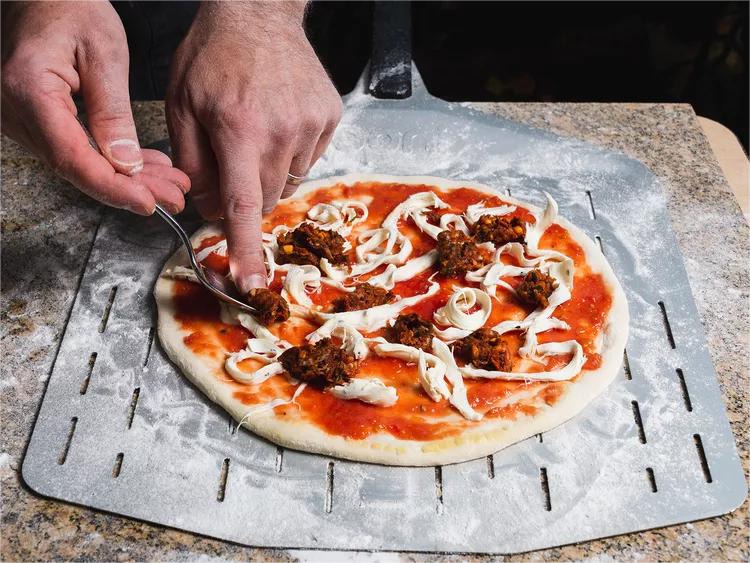
As for where to place the pie, my advice is to move it as far away from the flame as possible, especially at first. That's why I tend to think it's best to stretch your pies to a diameter an inch or two narrower than your oven, to provide some side-to-side wriggle room. I make 12-inch pies in my 16-inch Koda, and recommend 10- or 11-inch pies for 12-inch ovens.

When pizzas cook in two minutes or less, there’s almost no room for error. As Christy mentioned, “The rapid cook time is…why pizza makers need to keep a close eye on their pizza throughout the entire bake.” And it's also why you want to rotate the pie regularly for an even bake. But don't rotate the pie too quickly at first, as she pointed out. “[M]any users…make the mistake of trying to turn their pizza...before the bottom sets, and this can result in tearing. If the oven floor temperature is hot enough, the bottom of the crust should be ready to turn within about 30 seconds.”

 
While I find my perforated metal peel to work just fine for both launching and turning pies, others, like Elizabeth, prefer something more compact during the baking stage. “Another absolute must-buy is a smaller turning peel,” she said. “[Y]ou want to be doing quarter turns of your pizza for the 90 seconds [or so] it is in the oven. The only way to achieve this is with the turning peel—it will be your new best friend!”

Ingredients

2 cups '00' Pizza Flour
1/8 teaspoon instant yeast or active dry yeast
1/2 teaspoon granulated sugar
1 1/4 teaspoons salt
1/3 cup pizza sauce
3 ounces fresh mozzarella cheese (or about 3/4 cup shredded mozzarella)
Fresh basil leaves

Instructions

1. Combine the flour, yeast, sugar, and salt in a large bowl. Gradually add water, mixing until a dough forms.
2. Knead the dough on a lightly floured surface until smooth and elastic.
3. Place the dough in a greased bowl, cover, and let it rise in a warm place until doubled in size, about 2 hours.
4. Preheat your oven to its highest setting, ideally around 700°F (371°C). If you have a pizza stone, place it in the oven while preheating.
5. Divide the dough into balls and roll out each ball into a thin circle.
6. Spread a thin layer of pizza sauce over the dough, leaving a small border for the crust.
7. Slice the mozzarella into 1/4-inch thick pieces and distribute evenly over the sauce.
8. Bake the pizza in the preheated oven for about 8-12 minutes, or until the crust is golden and the cheese is bubbly and slightly browned.
9. Remove from the oven and top with fresh basil leaves. Slice and serve immediately.

Frequently Asked Questions

How long does it take to cook Homemade Pizza

Cooking time for your homemade pizza typically ranges from 8 to 15 minutes. The exact time varies depending on the crust's thickness and pizza size. For a thin crust, aim for the shorter end of the range, while a thick crust will require more time for even cooking.

 
Thin Crust: 8-10 minutes
Medium Crust: 10-15 minutes

What is the ideal temperature for baking a pizza in a conventional oven?

Your conventional oven should be preheated to the highest heat, typically between 450°F (232°C) and 500°F (260°C), for a standard pizza. This high heat mimics the conditions of a traditional pizza oven and helps to achieve a crisp crust and well-cooked toppings.

 
Can pizza be cooked effectively in an oven without a pizza stone, and if so, how?

Yes, you can cook pizza without a stone. Preheat a baking sheet in the oven as it warms up and then slide the pizza onto the hot sheet. Alternatively, for a softer crust, you can simply place the pizza on a baking tray and cook it at high heat.

 
What are the time and temperature guidelines for cooking a frozen pizza in an oven?


Contact Us

Author:

Ms. Wenny

Phone/WhatsApp:

18667409572

Popular Products
You may also like
Related Information
Ten Chinese BBQ Cart Table Suppliers Popular in European and American Countries

**BBQ Cart Table Trends:** Rising demand for multifunctional, portable designs. Integration of smart tech like Bluetooth speakers & USB ports. Durable, weather-resistant materials gaining popularity....

Ten Chinese Outdoor Barbecue Grill Suppliers Popular in European and American Countries

Title: Outdoor Barbecue Grill The outdoor barbecue grill market is booming, driven by a rise in at-home entertaining and a growing preference for outdoor living spaces. Innovations in smart grilling...

China Top 10 Hybrid Pizza Oven Potential Enterprises

Title: Hybrid Pizza Oven Trend: Combining traditional brick oven authenticity with modern electric precision, hybrid pizza ovens are gaining popularity for their versatility, efficiency, and ability...

Asia's Top 10 Inch Gas Pizza Oven Brand List

Inch Gas Pizza Ovens, popular in commercial kitchens, offer quick, even heating for perfect pizzas. Ideal for pizzerias, they come in various sizes, with 24-72 inch models being common, supporting...

Related Categories

Email to this supplier

Subject:
Email:
Message:

Your message must be betwwen 20-8000 characters

  • Send Inquiry

Copyright © 2025 Ningbo Yinzhou Weinuo Machinery Manufacturing Co., Ltd. All rights reserved. Privacy Policy

We will contact you immediately

Fill in more information so that we can get in touch with you faster

Privacy statement: Your privacy is very important to Us. Our company promises not to disclose your personal information to any external company with out your explicit permission.

Send